


How to Brief a Kitchen Designer: Getting the Most From Your First Consultation
One of the most common things we hear from clients at the beginning of a project is some version of: “I am not sure exactly what I want yet.” That is completely fine – in fact, it is one of the reasons a proper design consultation exists. But arriving at that conversation with some preparation will make the whole process more productive, more enjoyable, and ultimately more likely to result in a kitchen you will love.
Here is what the team at Ashley Jay Kitchens finds most useful to know at the start of a project, and how to think about your brief before your first design consultation.
Start With How You Live, Not How You Want It to Look
The most useful thing you can communicate to a kitchen designer is not the style you are drawn to, it is the way your household uses the space. How many people cook, and at the same time? Do your children do homework in the kitchen? Is the kitchen a social space, and if so, how many people do you typically have in it? Do you cook from scratch most days, or is the kitchen used primarily for lighter meals and morning routines?
These answers shape the layout, the storage, the workflow, and the proportions of the design in ways that no mood board can. A kitchen that has been designed around how you actually live will always outperform one that was designed primarily around how it looks.
Be Honest About What Has Not Worked Before
If you have had a kitchen before, and most clients have, think carefully about what frustrated you. Was there never enough storage? Did the workflow between the hob and the sink feel awkward? Was the kitchen too isolated from the rest of the house? Did the materials not stand up as well as you expected?
These are not complaints, they are incredibly useful design information. One of the most valuable things a good designer can do is help you avoid repeating the mistakes of a previous kitchen. It is something we take seriously in every project, and it is one of the reasons the briefing conversation matters as much as it does. You can explore our portfolio of completed projects to get a sense of the range of problems we have helped clients solve.
Gather Inspiration, But Hold It Lightly
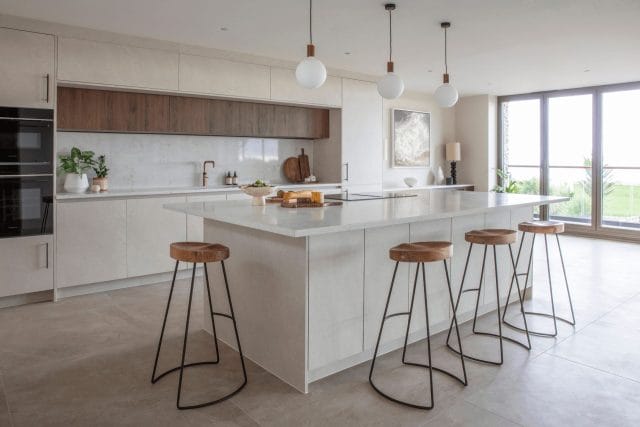
A collection of images, from Instagram, Pinterest, or magazines, is a genuinely useful starting point for a design conversation. It tells a designer something about the feeling and aesthetic you are drawn to, even if you cannot yet articulate exactly why. Bring those images and share them openly.
But hold them lightly. An image of a kitchen in a Californian beach house or a Norwegian farmhouse tells you something about a visual direction, it does not tell you whether that direction will work in your specific home, with your specific light, proportions, and way of living. A great designer will take your inspiration seriously and translate it into something that is genuinely right for your home rather than simply a replica of someone else’s.
Know Your Non-Negotiables, and Your Flexibilities
Most clients come to a project with a mixture of firm requirements and open questions. Being clear about which is which saves a great deal of time. If you know you need a range cooker, or that you will not compromise on natural stone worktops, or that the kitchen must accommodate a large dining table, say so early. These are the constraints that shape the design from the outset.
Equally, be clear about where you are genuinely open. If you have no strong view on the door style, or are undecided on the colour palette, say that too. It gives the designer room to make recommendations based on what will genuinely work best, rather than working around assumptions that may not be real. Our team will always help you work through this during the consultation process.
Ask the Designer Questions Too
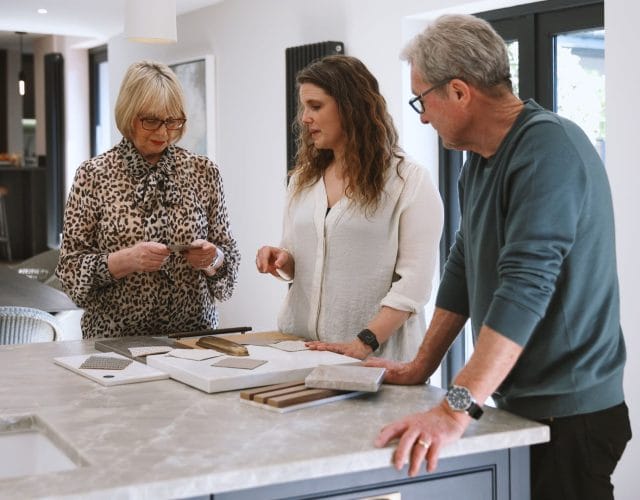
A design consultation is not a one-way brief. It is also an opportunity to understand how the designer works, what their process looks like, and whether you feel comfortable with them. Ask how they handle disagreements. Ask how they manage projects when things get complicated. Ask what their involvement looks like through the installation phase.
The right designer will welcome those questions. If the answers give you confidence, that this is someone who will guide you honestly, who cares about the outcome more than the sale, and who will still be fully engaged at the end of the project as they were at the beginning, that is a very good sign. At Ashley Jay Kitchens, we will always tell you what we think, and we will always tell you why. Get in touch to arrange an initial conversation.
Frequently Asked Questions
Do I need to have a budget in mind before my first consultation?
It is helpful but not essential. Having a broad sense of your budget allows the designer to make realistic recommendations from the outset. If you are uncertain, we would rather have an honest conversation about what different levels of investment look like than work to an assumption that turns out to be wrong. We are always transparent about costs.
Should I have measurements of my kitchen ready?
Rough measurements are useful, but do not worry if they are not precise. For an initial consultation, a general sense of the space is enough. We will carry out a detailed site survey as part of the design process, and it is always better to measure properly ourselves than to rely on approximate dimensions at the design stage.
What if I do not have a clear idea of the style I want?
That is completely normal and nothing to worry about. Part of the design consultation is helping you articulate what you are looking for, through questions, through images, and through the conversation itself. You do not need to arrive with a finished brief. You need to arrive ready to talk openly about how you live and what matters most.
How long does a first consultation typically take?
An initial design consultation at Ashley Jay Kitchens typically takes between one and two hours. If it takes place in your home, which we prefer wherever possible, it allows us to properly understand the space and the brief in context. That time is always well spent.
Will I be charged for the initial consultation?
Please get in touch directly to discuss how our initial consultation process works. We would always rather spend time understanding your project properly at the outset than rush into a design that does not serve you well.